.svg)
What is Portable Appliance Testing (PAT) and what does it actually check?
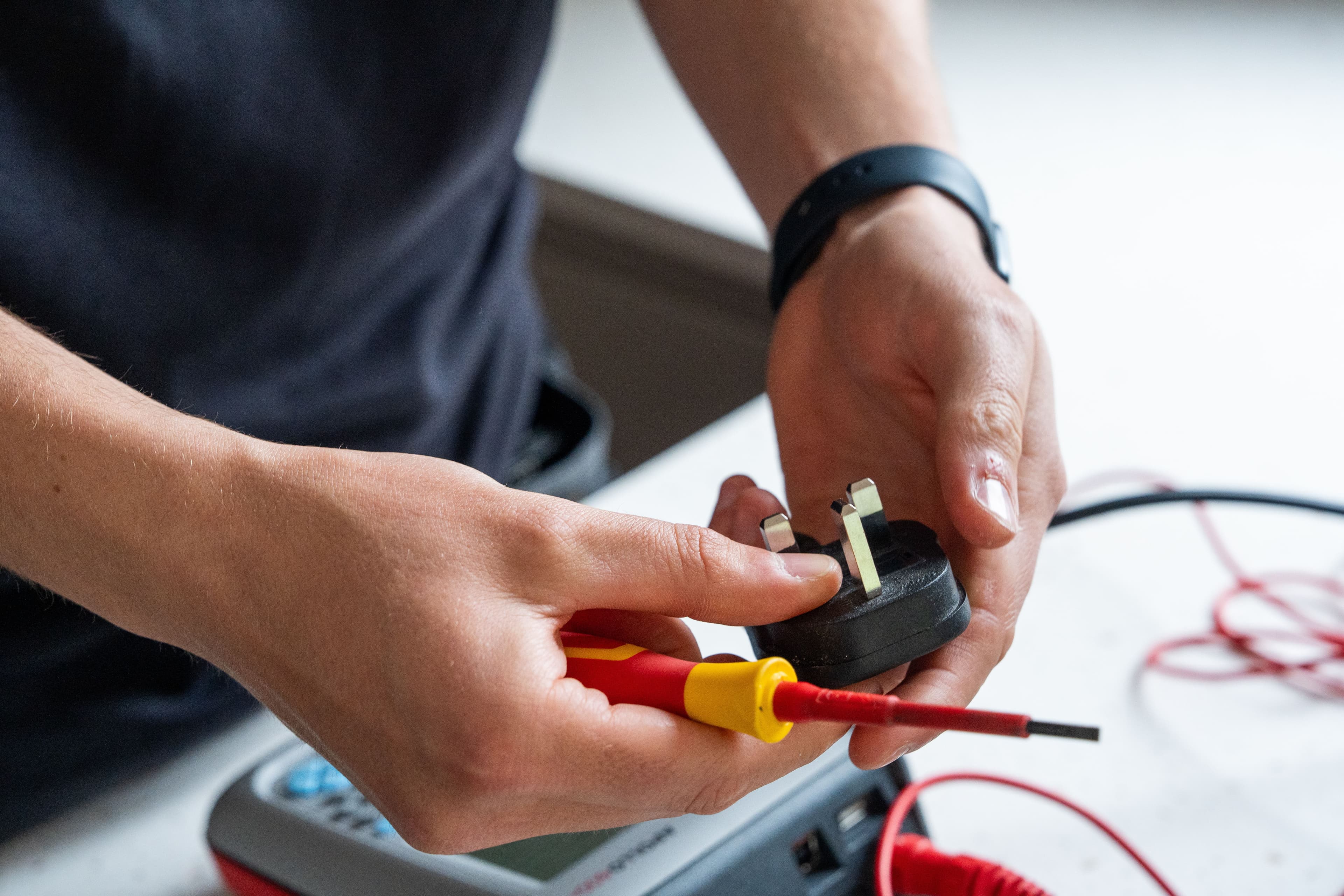
PAT testing checks whether portable electrical equipment is safe to use. Find out what the inspection involves, who needs it, and how often appliances should be checked.
What is portable appliance testing?
Portable appliance testing is the inspection and testing of portable electrical equipment. It is usually shortened to PAT, although many people call the service “PAT testing”.
The aim is to find signs that an appliance may be unsafe to use. That could be a damaged cable, a loose plug, a cracked casing or an electrical fault that a visual check alone would not reveal.
PAT testing is used in many settings, including offices, shops, workshops, hotels, schools, communal areas and short-term lets. The equipment might include computers, kettles, extension leads, printers, vacuum cleaners, power tools and kitchen appliances.
What does a PAT test check?
A PAT test normally starts with a visual inspection. The engineer checks accessible parts of the appliance, plug and cable for signs of damage or wear. This may include looking for:
- A cracked or damaged plug or appliance casing
- A cable that is frayed, cut, crushed or poorly secured
- Exposed wires or signs of an unsuitable repair
- Burn marks, overheating or other visible damage
- A fuse that is unsuitable for the appliance, where applicable
A suitable electrical test may then be carried out using a PAT tester. The test depends on the type of appliance and its electrical design. It can help identify faults that aren’t visible, such as a problem with the earth connection or the insulation.
The visual inspection matters just as much as the instrument test. Some defects can be seen but may not be picked up by the tester alone. The checks should be carried out by someone competent to inspect the equipment and interpret the results.
What doesn’t a PAT test check?
A PAT test is not an Electrical Installation Condition Report (EICR). An EICR examines the fixed electrical installation, such as wiring, sockets and the consumer unit. PAT testing looks at appliances and equipment.
A PAT test also isn’t a full functional check of a computer, server or other device. It does not check software, files or stored data, and a pass result cannot guarantee that an appliance will remain safe indefinitely. If you have equipment that must stay running, such as a server or business-critical system, tell your testing provider before the visit so any access, shutdown or disconnection can be planned.
Who needs PAT testing?
PAT testing can be useful for businesses and organisations that provide or use electrical equipment at work. Employers need to keep work equipment safe, but the checks required depend on the equipment, how often it is used and the conditions it is used in.
It can also be relevant for Scottish landlords and short-term-let hosts. Scottish Government guidance for private landlords says an electrical safety inspection should include in-service inspection and testing of relevant appliances provided by the landlord. For short-term lets, Scottish Government licensing guidance requires a PAT report for movable appliances that guests can access. The requirements depend on the type of property and the rules that apply to it, so check the relevant guidance for your situation.
If you’re a homeowner checking appliances you own and use at home, PAT testing is not usually a legal requirement. It can still be useful if you have a particular concern, such as an older appliance or one that has been heavily used.
How often should appliances be PAT tested?
There is no single annual interval that applies to every appliance. The right inspection and testing frequency depends on the type of equipment, how it is used, the environment and the results of previous checks.
For example, a power tool used regularly on a busy building site is more likely to be damaged than a desktop computer that stays in a clean, dry office. A competent person can help set an appropriate schedule and review it if the equipment, its use or its condition changes.
The HSE’s PAT testing guidance says annual testing is not automatically necessary for every appliance in a low-risk workplace. Regular user checks and visual inspections may also form part of a sensible maintenance plan.
What happens if an appliance fails?
If an appliance fails an inspection or test, it should not simply be put back into use without action. It may need to be repaired by a competent person, replaced or taken out of service. The right action depends on the fault and the appliance.
A PAT record and labels can help a business keep track of which equipment has been checked and what action is needed. They are useful for managing a maintenance plan, although general workplace rules do not require every appliance to carry a label.
Arrange PAT testing in Fife, Dundee or Edinburgh
Based in Fife, Certworks provides PAT testing across Fife, Dundee and Edinburgh. If your business is elsewhere in Central Scotland, get in touch and we’ll confirm whether we can help.
If you’re unsure which appliances should be included, or need to plan testing around equipment that must remain in use, contact Certworks before booking.